Bucks Magnet - Win Real Money
CazualLabSimulation
4.6244.00 Reviews
- Version
- 1.0.2
- Installs
- 100.00K
- Age Rating
- Teen
Screenshots
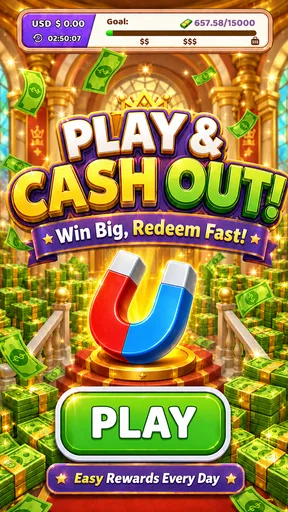
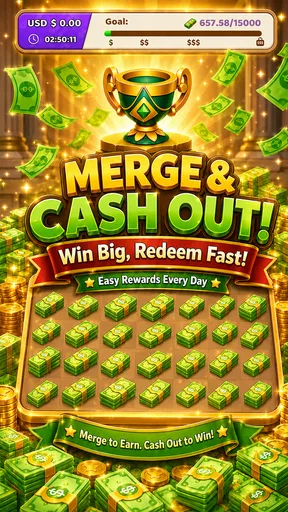
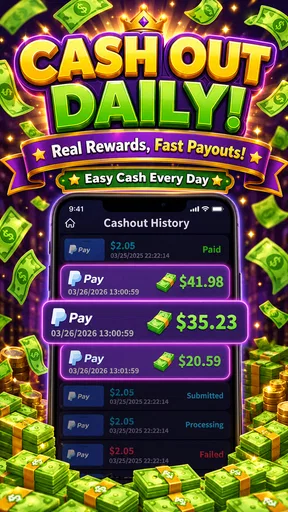
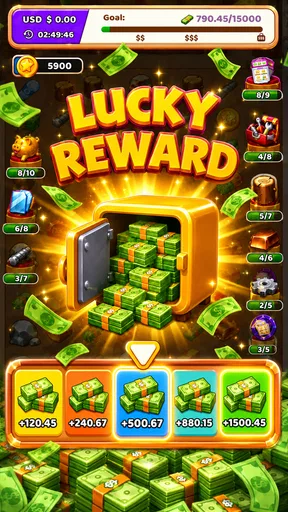
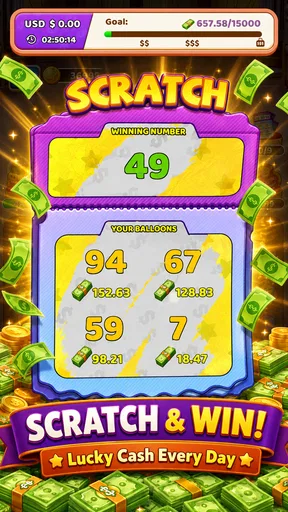
Our Review of Bucks Magnet - Win Real Money
 Analysis by Appyee
Bucks Magnet - Win Real Money caught my attention because it presents itself as a simulation game built around a very direct idea: build up virtual earnings and work toward a cash-out. That promise gives the game an immediately readable purpose, but it also means the experience needs to be judged carefully. I spent time looking at how the presentation supports that goal, how the pacing affects repeated play, and whether the game feels like a satisfying simulation rather than simply a rewards interface with game-like decoration.
My first impression is that this is best approached as a lightweight, goal-driven mobile game rather than a deep economic simulator. It is free to play, comes from CazualLab, and is listed for Teen players. The current version is 1.0.2, with support beginning at Android 8.0. Those details make it accessible to a broad range of phones, although the real question is not whether it can run, but whether its central reward loop feels worthwhile for the way you plan to use it.
The store presence is already fairly substantial for a young-feeling title: it shows a 4.6 average from around 2.2 thousand ratings and more than 100 thousand installs. I read that as a sign that the basic concept is easy for people to understand and try. It does not automatically prove that every player will enjoy the longer-term routine, though. Games built around gradual accumulation can feel engaging during short sessions and repetitive later, so I paid particular attention to the transition between those two phases.
How the presentation establishes its playable mood
I find the presentation most effective when I treat it as a focused progress screen rather than a world to explore: its money-centered theme keeps the goal in view, while the simulation framing gives repeated check-ins a simple purpose. That mood will suit players who like measured progress more than action or story, and it also makes pacing the key question: how does the routine hold up once the initial novelty fades?
A clear visual language for a money-focused simulation
The strongest part of the concept is its clarity. The title and store positioning tell me what kind of fantasy I am entering: I am not managing a city, raising a family, driving a vehicle, or building a traditional business. I am chasing fast-growing in-game earnings and watching progress move toward a possible withdrawal. That narrow focus gives every screen a practical role. The interface does not need to teach an elaborate fictional universe; it needs to keep the target visible and make each action feel connected to it.
That simplicity can be a strength when I only have a few minutes. I can open the game with a specific intention, check how far I have moved toward the next threshold, and decide whether another short session is worth my time. In that sense, the setting is less about a detailed fictional place and more about a recognizable modern routine: check progress, make a few decisions, wait or act again, and return later. The game’s world language is therefore functional, almost like a dashboard turned into a small simulation.
What I would not expect here is the kind of rich environmental storytelling found in a management game with maps, characters, buildings, or a long campaign. That is not necessarily a flaw, but it shapes the audience. Players who need a strong sense of place may find the experience thin. Players who prefer a clean objective and minimal narrative interference may appreciate that the game does not appear to bury the main purpose under unrelated decoration.
The visual mood also matters because the reward theme can easily become visually noisy. When a game constantly emphasizes money, numbers, and progress, every element competes for attention. I found the best way to approach it was to treat the display as a working surface rather than something to admire. I looked for the action that moved me forward, ignored anything that did not change my decision, and avoided turning every visible prompt into an obligation.
Why the setting feels closer to a routine than an adventure
The setting creates a particular emotional tone: hopeful, transactional, and slightly restless. The promise of getting to a cash-out point gives the game forward pressure, while the simulation format makes that pressure feel less dramatic than it would in an action game. I am not surviving danger or solving a mystery. I am trying to improve a balance and decide when to return.
That makes the game suitable for small gaps in the day. I can imagine checking it while waiting for a bus, during a short break, or after finishing another task. A realistic everyday scenario would be opening it once in the morning to review progress, making only the decisions that seem efficient, and returning later rather than leaving it open continuously. This approach keeps the game from taking over the day and helps me judge it by its actual entertainment value instead of by the size of the promised reward.
There is also a useful psychological distinction between playing for fun and playing for money. The former lets me enjoy the loop even when progress is slow. The latter makes every delay feel like lost time. I think this game works better when I keep those motivations separate. If I expect it to replace income, the experience is likely to become frustrating. If I view the cash-out goal as an added incentive inside a small simulation, the mood is easier to enjoy.
Sound, rhythm, and the feeling of repeated progress
Sound has an important job in a game like this, even when the mechanics are simple. There is no large world to explore, so the rhythm of taps, confirmations, and progress moments becomes the main source of feedback. A good sound pattern can make a small action feel complete. A poorly judged one can make repetition tiring very quickly.
My advice is to pay attention to how the game feels during a longer sequence, not just during the first few actions. A single confirmation can be satisfying; the same confirmation repeated many times can start to feel like friction. This is one reason I prefer short, intentional sessions. I can enjoy the sense of movement without allowing the reward rhythm to become background noise.
The pacing is more important than spectacle here. A simulation game about accumulation needs enough visible movement to reassure me that my actions matter, but not so much speed that the process feels meaningless. If progress arrives too slowly, I lose interest. If it arrives too quickly, the target loses its value. The most coherent mood comes from a middle ground where each return to the game gives me something to inspect and a reason to decide what to do next.
That rhythm also affects trust. When a game is connected to a real-money claim, I want the interface to be calm and understandable rather than frantic. Clear progress feedback feels more credible than exaggerated celebration. I would rather see exactly what changed than be distracted by constant excitement. For me, the atmosphere works best when the game treats progress as something to follow, not something to shout about.
Where the simulation idea fits the reward loop
As a simulation game, Bucks Magnet succeeds when it makes accumulation feel like a process I can influence. The central loop has a natural appeal because it turns waiting and checking into a measurable objective. I am not simply collecting points without context; I am watching a balance move toward a practical outcome. That gives ordinary mobile-game repetition a clearer reason.
At the same time, the simulation label should not lead me to expect the complexity of a full financial or business simulator. There is a major difference between presenting the feeling of earning and modeling real economic choices. I would choose a dedicated management game instead if I wanted supply chains, staffing, budgeting, market changes, or long-term planning. This title is better suited to players who want a compact progression loop with a money-oriented theme.
One non-obvious way to improve the experience is to set a personal stopping rule before playing. For example, I might decide that I will check progress at set moments rather than repeatedly reopening the app. This prevents the game’s central promise from turning into compulsive checking. It also lets me see whether the actual play is enjoyable on its own. If I only feel motivated by the possibility of a payout, that tells me something important about whether this is the right game for me.
Another useful habit is to treat every apparent opportunity as a decision, not an automatic action. In reward-focused games, the most visible button is not always the most valuable use of attention. I would pause to understand what an action changes, how it affects progress, and whether it moves me closer to my immediate goal. This slower approach may sound less exciting, but it makes the simulation feel more deliberate and reduces the chance of playing on autopilot.
Cash-out expectations and practical caution
The promise of cashing out every three hours is the feature that will attract most potential players, but it is also the part that deserves the most careful interpretation. A time interval is not the same thing as guaranteed earnings. I would not install this expecting a reliable income stream, and I would never spend money or share sensitive information merely to accelerate a reward. The game is free, which makes trying it low-risk financially, but my time still has value.
Before committing to a routine, I would read each in-game instruction carefully and make sure I understand the conditions attached to progress and withdrawal. I would also keep expectations modest until I had personally seen how the process works from start to finish. This is not cynicism; it is sensible behavior whenever a game combines entertainment with real-world money language.
That caution is especially relevant for Teen players. The age rating makes the game appropriate for that audience category, but younger users may still benefit from guidance about online rewards, personal information, and the difference between a game’s virtual balance and guaranteed cash. I would recommend that parents discuss the money theme rather than assuming that a Teen rating explains every practical implication.
There is a trade-off between convenience and attention. A game that lets me return periodically can fit around a busy day, but a three-hour cycle may also encourage unnecessary checking. I would use notifications or reminders only if they genuinely help me manage the game, not if they make me feel pressured to return constantly. The healthiest workflow is to let the app fit into my schedule instead of reorganizing my schedule around it.
Who will enjoy it, and who should skip it
I think Bucks Magnet is a reasonable match for players who like short simulation sessions, visible accumulation, and a simple financial theme. It may appeal to someone who enjoys checking incremental progress and prefers a focused goal over a large story. It is also a practical option for people with older Android devices, since the minimum requirement is Android 8.0 rather than a recent operating system.
I would skip it if I want a conventional game with rich controls, exploration, character development, or a strong narrative setting. I would also skip it if I am looking for dependable real-world income. The game’s appeal depends on being comfortable with repetition and uncertainty around how rewarding the routine will feel over time. A traditional idle game may be better for someone who only wants effortless number growth, while a serious finance simulator would be better for someone seeking meaningful economic strategy.
It is also not ideal for players who dislike reward-based pacing. Even a well-presented accumulation loop can feel slow when I want immediate action. In that situation, an arcade or puzzle game would provide more direct moment-to-moment satisfaction. Choosing the right alternative depends on what I actually want: Bucks Magnet is about checking a goal and returning to it, not about constant mechanical variety.
My practical way of using the game
If I were recommending it to a friend, I would suggest a small trial routine rather than an open-ended commitment. I would play for a few days at natural break times, note whether the progress feels understandable, and see whether the cash-out path is clear enough for me to trust. I would avoid judging it from one exciting opening session because reward games often feel most compelling before the repetition becomes visible.
I would also keep the game separate from essential financial planning. Any amount shown inside the app should be treated as part of the game until it has successfully passed through the complete withdrawal process. That mindset protects the enjoyment of the simulation while preventing the money theme from creating unrealistic expectations. It also gives me a clear test: if the game is not fun without the promise of a payout, it may not deserve regular attention.
For a busy user, the best workflow is probably brief and structured: open the game, review the current state, take the actions that make sense, and close it. For a curious user, a longer session can be useful for understanding the pacing and identifying which parts feel meaningful. In both cases, I would resist tapping through every screen simply because it is available. The game becomes more coherent when I play with a purpose.
Overall atmosphere and recommendation
My main takeaway is that the game’s mood comes from anticipation rather than adventure. The art direction and setting support a compact fantasy of progress, while the sound and rhythm are most effective when they make small changes feel noticeable without overwhelming the player. The mechanics fit that mood because they keep attention on accumulation, timing, and the next target.
The result is a focused simulation experience with a distinctive reason to return. Its strongest quality is that the objective is immediately understandable. Its biggest limitation is the same thing: once I understand the loop, the experience may not offer enough variety for players who need constant novelty. The money-oriented promise also requires a more careful attitude than an ordinary free mobile game.
With a 4.6 average and around 2.2 thousand ratings, it has clearly found an audience, and more than 100 thousand installs suggest that the concept is easy to discover and try. I would still judge it personally by the quality of the routine rather than by popularity. The free price makes that trial straightforward, but I would protect my time, avoid treating it as income, and read the withdrawal instructions closely.
In the end, I would recommend Bucks Magnet to a friend who enjoys lightweight simulations and wants a progress-focused game that can be checked in short sessions. I would not recommend it as a substitute for work, a serious financial tool, or a deep management game. Used with realistic expectations, it offers a coherent, money-themed atmosphere and a simple reason to come back. Whether that is enough depends on one question: do you enjoy the process of watching progress build, even before the final reward arrives?
Verdict
Strengths of Bucks Magnet - Win Real Money
- Simple magnet-based gameplay is easy to learn and play casually.
- Short rounds make it convenient for quick breaks.
- Clear cash-prize focus may appeal to reward-seeking players.
- Lightweight design should work well on many Android devices.
- Progress and rewards can add motivation to keep playing.
Limitations of Bucks Magnet - Win Real Money
- Cash-out eligibility may depend on minimum thresholds and conditions.
- Rewards can require substantial time before becoming worthwhile.
- Frequent ads may interrupt gameplay and reduce enjoyment.
- Availability and payment options may vary by country.
- Real-money features may involve age and account verification requirements.
Similar Picks in This Category
View All
Truckers of Europe 3
Wanda Software4.3

Town Building Life Simulator
XGame Global4.2

Fidget Toys Trading・Pop It 3D
Freeplay Inc4.7

Sculpt People
CrazyLabs LTD4.4

Scary Teacher 3D
Z & K Games4.2

Hair Tattoo: Barber Shop Game
CASUAL AZUR GAMES4.3
Frequently Asked Questions
What is Bucks Magnet - Win Real Money?
Bucks Magnet - Win Real Money is a rewards-style mobile game that lets players earn in-game points by completing activities such as playing mini-games, collecting bonuses, watching advertisements, or reaching certain milestones. The accumulated balance may be presented as redeemable rewards, depending on the app’s current rules, supported payment methods, and eligibility requirements. It should be treated as entertainment with possible rewards, not as a guaranteed income source.
Can I really withdraw money from Bucks Magnet - Win Real Money?
The app may offer cash or gift-card redemptions after you reach a minimum balance, but successful withdrawal depends on several conditions. These can include account verification, availability in your country, compliance with the terms, and the selected payout method. Reward apps frequently change their thresholds and offers, so check the latest withdrawal rules inside the app before spending significant time collecting points.
How do you earn rewards in Bucks Magnet?
Rewards are generally earned through a combination of gameplay and optional activities. Depending on the version you install, this may include completing levels, collecting magnets or bonuses, watching sponsored videos, completing offers, and returning for daily rewards. The number of points awarded can vary considerably, and advertisements may be required for some bonuses. Read each offer carefully before accepting it.
Is Bucks Magnet - Win Real Money safe to use?
As with any rewards application, users should review the permissions, privacy policy, developer information, and payment conditions before creating an account. Avoid entering sensitive information unless it is genuinely required for a clearly explained payout process. Do not install modified versions from unofficial websites, and remember that advertising, tracking, and third-party offer providers may be part of the experience.
What should I know before downloading Bucks Magnet?
Before downloading, confirm that the application is available in your region and that its advertised payout options work in your country. You should also check the current user reviews, minimum withdrawal amount, age requirements, internet and advertising expectations, and whether the app contains in-app purchases. Rewards are not guaranteed, so download it only if you enjoy the gameplay even without receiving money.
Play our best games!


